
Vet Approved Quick Answer
Dogs with liver disease require high-quality, highly digestible protein in controlled amounts, moderate fat, restricted copper (when indicated), and excellent palatability. Prescription hepatic diet remains the first choice. Non-prescription foods should be considered only under veterinary supervision and conditionally.
Understanding Liver Disease in Dogs: Why Diet Plays a Critical Role
The liver plays a crucial role in protein metabolism, detoxification, bile production, and vitamin storage. When the liver function is compromised, improper nutrition can:
Common Myth About Liver Disease Diet
Myth: Dogs with liver disease must always eat a low-protein diet.
Fact: Liver disease does not automatically mean “low protein.” The goal is the right protein, not protein elimination.
Nutritional Goals For Dogs With Liver Disease
1. Protein: Quality Over Quantity
What Does “High Quality Protein” Mean in Liver Disease?
In dogs with liver disease, protein quality matters more than total protein amount. High-quality protein refers to protein sources that are highly digestible, biologically appropriate, and produce less ammonia during metabolism and reducing stress on the liver.
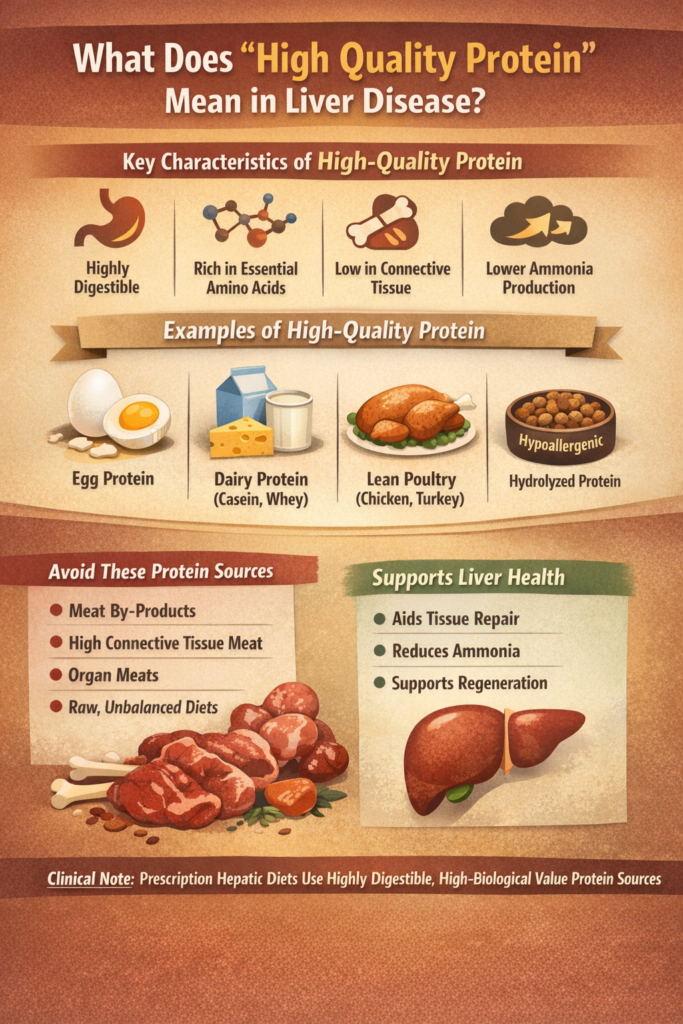
Characteristics of High-Quality Protein
A protein source is considered high-quality for liver disease when it is:
Examples of high-quality protein
Clinically preferred protein sources in hepatic diets include:
These protein supports tissue repair and liver regeneration while minimizing the risk of hepatic encephalopathy.
Protein Sources to Avoid
Low-quality or poorly digestible protein increases ammonia load, should be avoided.
Clinical Note: Prescription hepatic diets are formulated using highly digestible, high-biological value protein sources to meet these requirements while minimizing ammonia production
2. Copper Management: Critical
3. Fat: Moderate
4. Carbohydrate and Fiber
5. Micronutrients
Copper restriction is essential in predisposed breeds because impaired copper excretion leads to hepatic accumulation, inflammation, and progressive liver damage. eg, Bedlington Terrier, Labrador Retriever, Doberman Pinscher, West Highland White Terrier, Skye Terrier, Dalmatian
Dog Food Evaluation Framework For Liver Disease
We evaluate liver diets using the same core framework applied site-wide, with liver liver-specific focus:
See our full Dog Food Evaluation Framework for details
Best Dog Food For Liver Disease: Prescription & Non-Prescription
The management of liver disease in dogs requires diets that provide high digestible protein, controlled copper, moderate fat, and balanced nutrients to support liver function. Prescription hepatic diets remain the first-line choice backed by clinical evidence and veterinary safety.
For dogs that refuse prescription diets or require fresh food options, conditional non-prescription diets can be considered, but only under strict veterinary supervision.
Below, we break down the top prescription diets for liver disease, carefully selected non-prescription alternatives, and food that should be avoided to protect your dog’s liver health.
Tier 1: Prescription Dog Food For Liver Disease
|
Brands |
Protein |
Fat |
Copper |
Key Feature |
Best For |
|
Hills Prescription Diet I/d Liver Care |
~ 18% |
~7% |
Low |
Highly digestible protein, added antioxidant, clinical track record |
Most dogs with chronic liver disease |
|
Royal Canine Veterinary Diet Hepatic |
~16% |
~8% |
Very low |
Moderate, digestible protein, highly palatable |
Dogs refusing other Rx diets |
|
Purina Pro Plan Veterinary Diets HP Hepatic |
~18% |
~8% |
Low |
Controlled protein, copper restriction, consistent manufacturing |
The dog needs long-term compliance |
Tier 2: Conditional Non-Prescription Options
For dogs that refuse prescription diet or need fresh food, certain non-prescription options may be used under supervision
|
Brand |
Protein |
Fat |
Copper |
Nutrition Highlight |
Use case |
|
Farmina Vet Life Hepatica |
Moderate |
Moderate |
Controlled |
Better palatability than many Rx diets |
Short-term or transitional use |
|
JustFoodForDogs Hepatic-friendly custom recipes |
Custom |
Custom |
Controlled |
Fresh food, tailored protein, and copper |
Require nutritionist and vet oversight |
These diets can help improve appetite and compliance, but nutrient consistency and long-term safety are less predictable than prescription diets
When looking at “Tier 2” retail foods, look for the AAFCO Statement. If it says “All Life Stages,” it likely has higher copper levels than a “Maintenance” or “Senior” formula, as puppies require significantly more copper for growth
Dog Foods to Avoid in Liver Disease
Feeding and Transition Guidelines
Frequently Asked Questions
-
1. Is Low-Protein Food Always Needed For Liver Disease?
No. Protein restriction is only required in hepatic encephalopathy. Most dogs need high-quality digestible protein
-
2. Can a Dog With Liver Disease Eat Grain-Free Diets?
Generally, no. Grain-free diets often have unknown copper levels and lack clinical testing
-
3. Can a Homemade Diet Help Liver Disease?
Only if formulated by a veterinary nutritionist. Improper diets can worsen liver function
-
4. How Long Should a Dog Stay On Hepatic Food?
Often long-term or lifelong, depending on the disease cause and progression
-
5. Can Dogs With Liver Disease Eat Normal Dog Food?
No. Dogs with liver disease should not eat regular commercial dog food unless specifically approved by a veterinarian. Standard diets often contain inappropriate protein levels, excess copper, and uncontrolled nutrients that can worsen liver damage. Prescription hepatic diets are formulated to support liver function safely and are considered part of medical treatment, not just nutrition
Vet’s Final Verdict
For dogs with liver disease, diet is a cornerstone of treatment. Prescription hepatic diets remain the safest and most effective option. Non-prescription diets should be used conditionally and responsibly. If your dog shows poor appetite, weight loss, or neurological signs, consult your veterinarian immediately.
Written by a practicing veterinarian. This guide reflects current clinical nutrition standards and does not replace individualized veterinary care.
