

Vet Approved Quick Answer
Dogs with diabetes require diets that promote predictable glucose absorption, stable insulin response, and long-term metabolic consistency. In clinical practice, prescription veterinary diets are the most reliable and safest options. Non-prescription foods may be considered only in selected cases and under veterinary supervision.
When considering the best dog food for diabetes, it’s essential to consult with your veterinarian to ensure the best dietary choices for your pet’s health.
Why is Diet a Primary Therapy in Canine Diabetes?
Canine diabetes mellitus is most commonly Type 1-like and is insulin-dependent, meaning the dog’s pancreas failed to produce sufficient insulin to regulate blood glucose.
Diabetes occurs when the pancreas fails to produce enough insulin, which can sometimes lead to pancreatic inflammation known as pancreatitis in certain dogs
Nutrition directly affects:
Unlike in human diabetic trend, dieatry novelty, and frequent food changes, or fashionable formulations actively destablize diabetic dogs. In veterinary medicine, predictibaility and not optimization is the therapeutic goal
Why Dietary Consistency Matters More Than Food Choice in Diabetic Dogs?
In diabetic dogs, metabolic control depends more on eliminating daily variability than finding “perfect” food. Even small, unpredictable changes in diabetic diet can alter post-meal glucose levels and disrupt insulin action, increasing the risk of both hyperglycemia and hypoglycemia. Therefore, dietary consistency is more crucial than food choice.
True consistency means:
When dietary intake becomes predictable, veterinarians can accurately match insulin type and dose to a repeatable glucose curve, therefore significantly reducing fluctuations and improving long-term stability.
Nutritional Goals for Dogs With Diabetes
Once dietary consistency is established, the next step is selecting a nutritional profile that supports stable glucose control without introducing variability. In diabetic dogs, macronutrients are not adjusted to achieve ideal numbers, but to create predictable metabolic responses that align with insulin action.
These nutritional goals focus on how food behaves in the body, not on trends, labels, or ingredient marketing. Each component below plays a specific role in maintaining long-term glycemic stability.
Key Nutritional Components in Diabetic Dog Diets
Before examining the best dog food for dogs with diabetes, it is essential to understand which nutritional components actually influence blood glucose levels in diabetic dogs.
Each macronutrient affects digestion, insulin response, and metabolic stability differently, and their balance determines how predictable a dog’s glucose curve will be.
The below explains how fiber, protein, fat, and carbohydrates function clinically in diabetic diets, and why their roles matter more than ingredient trends or brand claims.
Fiber: The Primary Regulator of Glucose Absorption
In diabetic dogs, fiber is not added for digestion alone, but it is also used deliberately to control the speed and magnitude of glucose absorption. Among all micronutrients, fiber has the most direct and predictable effect on post-meal glucose patterns.
From a clinical perspective, appropriate fiber intake helps
Moderately fermentable fibers such as beet pulp and cellulose are preferred because they provide glycemic control without causing excessive gas or diarrhea. Very high-fiber diets are not tolerated by all dogs and should be selected on an individual basis.
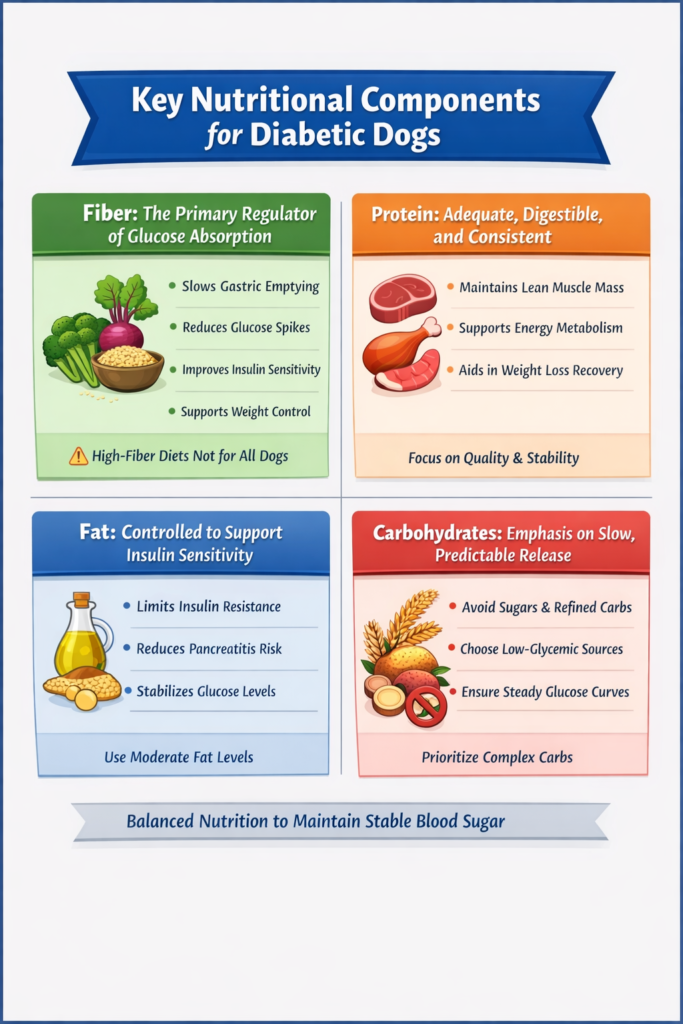
Protein: Adequate, Digestible, and Consistent
Protein plays a supportive, but not corrective, role in diabetic management. Its primary function is to preserve lean muscle mass and metabolic stability, especially in dogs experiencing weight loss after diagnosis.
In practice, protein supports:
There is no clinical evidence that supports the benefits of aggressive protein restriction in diabetic dogs unless concurrent kidney or liver disease is present. What matters most is digestibility and consistency, not extreme protein levels.
Fat: Controlled to Support Insulin Sensitivity
Fat intake has a powerful influence on insulin sensitivity. While fat is an essential dietary nutrient, excess dietary fat introduces metabolic variability that complicates diabetic control. Clinically, high-fat intake can
For most diabetic dogs, a moderate-to-low fat profile provides the best balance, particularly in overweight patients or those with a history of pancreatitis.
Carbohydrates: Emphasis on Slow, Predictable Release
Carbohydrates are not inherently harmful to diabetic dogs, but unpredictable carbohydrates are. The goal is not elimination, but controlled, slow glucose release that aligns with insulin action. Diets should avoid:
Instead, priority is given to complex, low-glycemic carbohydrate sources that produce stable, repeatable glucose curves.
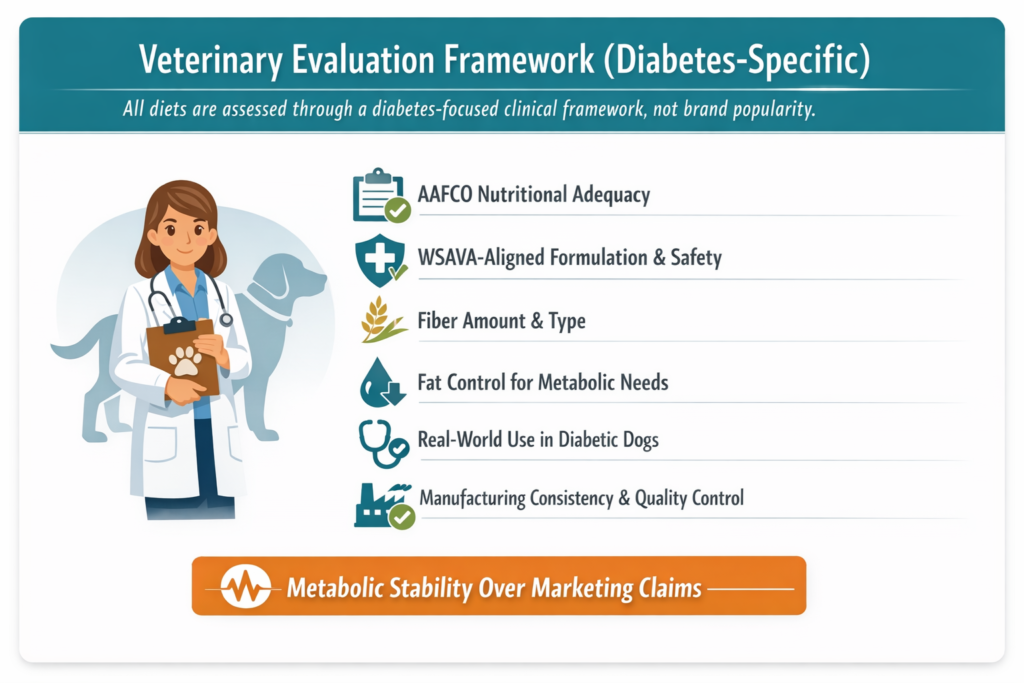
Veterinary Evaluation Framework for Diabetic Dog Foods
Tier I Best Prescription Dog Foods for Diabetic Dogs
Prescription diabetic diets are not “stronger” foods, but they are more predictable foods. They are formulated to deliver a repeatable glucose response, which is essential for safe insulin dosing. This predictability allows:
For this reason, prescription diets remain the first-line nutritional therapy in diabetic dogs.
Hill’s Prescription Diet w/d Multi-Benefit
Clinical Reasoning
Hill’s w/d is frequently selected when excess adiposity or insulin resistance is a primary driver of poor glycemic control. It’s higher total fiber slows gastric emptying and intestinal glucose absorption, reducing post-prandial glucose excursions. Controlled fat content further improves peripheral insulin sensitivity.
In practice, w/d tends to produce flatter glucose curves, particularly in overweight dogs transitioning from calorie-dense maintenance diets.
Most Appropriate For
Best suited when weight loss and glucose stability must be addressed simultaneously
Royal Canine Veterinary Diet Glycobalance
Clinical Reasoning
Glycobalance is often chosen when long-term dietary adherence is the limiting factor in diabetes management. Its fiber blend is designed to modulate glucose absorption without excessive bulk, while moderating fat and carbohydrate profile, and avoiding extremes that destabilize insulin response.
Palatability plays a clinically meaningful role here, and dogs that eat reliably at each dosing interval allow insulin to be matched more precisely to glucose absorption.
Most Appropriate For
Stable dietary dogs require lifelong dietary consistency, particularly those that refuse high-fiber formulations.
A compliance-focused option that prioritizes predictability over aggressive metabolic manipulations
Purina Pro Plan Veterinary Diets DCO (Diabetes Management)
Clinical Reasoning
This formulation is often selected for lean diabetic dogs or patients experiencing unintended muscle loss. Higher protein supports lean body mass and basal metabolic stability, while lower fat minimizes insulin resistance and pancreatitis risk.
Manufacturing and formulation consistency is a major strength, reducing lot-to-lot variation that can otherwise affect glucose curves.
Most Appropriate For
- Lean diabetic dogs,
- working dogs, or
- patients showing sarcopenia after diagnosis.
Prioritize metabolic stability and muscle preservation in non-obese diabetics.
Tier II Conditional Non-Prescription Dog Foods for Diabetic Dogs
Non-prescription dog foods should be viewed as risk-managed compromises, not equivalents. Their use requires closer glucose monitoring, slower transitioning, and a lower threshold for insulin adjustments.
Use only when Prescription diets are not feasible.
Farmina N&D Quinoa Weight Management
Clinical Reasoning
These diets may be considered when prescription foods are refused or unavailable. Compared to standard retail diets, it provides relatively higher fiber and avoids rapidly digestible carbohydrates.
However, its glycemic impact is less predictable than prescription formulations, and responses vary between individuals.
Clinical Caution
Transition must be gradual; glucose curves should be reassessed after dietary stabilization.
A conditional option with closer monitoring is require
Just Food For Dogs (Veterinary-Guided Recipes Only)
Clinical Reasoning
Fresh or home-style diets can be effective in selected diabetic dogs, but only when formulations and feeding patterns remain highly consistent. Variability in preparation or portion size can quickly destabilize glucose control
High potential benefits, high risk if not tightly controlled
Prescription vs Non-Prescription Diets: Clinical Context
While prescription diets remain the standard of care, real-world limitations such as cost, availability, or patient refusal occasionally necessitate alternatives. In such cases, non-prescription options may be considered, but only with caution and close monitoring.
Diets and Feeding Practices to Avoid in Diabetic Dogs
Certain feeding approaches introduce unnecessary metabolic variability and make insulin regulation more difficult.
Avoid:
These practices increase glucose volatility and compromise insulin stability.
Feeding and Insulin Coordination: Clinical Best Practices
Dietary consistency in diabetic dogs depends as much on timing and consistency as on formulation.
Key principles:
Vet Answers FAQs
What Nutrient Matters Most in a Diabetic Dog’s Diet?
The most critical nutrients in a diabetic dog’s diet are dietary fiber, controlled carbohydrates, and moderate fat. Fiber slows glucose absorption after meals, while consistent carbohydrate levels help insulin work predictably. Protein supports muscle mass but does not control blood sugar on its own.
How Does Fiber Help to Control Blood Sugar in Diabetic Dogs?
Fiber delays gastric emptying and reduces post-meal glucose spikes by slowing carbohydrate digestion. Fiber creates more stable blood glucose curves and improves insulin sensitivity over time.
Can Diabetic Dogs Eat Rice, Roti, Or Other Home Carbohydrates?
Yes, but only in measured, consistent amounts. Sudden changes in carbohydrate type or quantity can lead to a dangerous glucose spike. This is why commercial prescription diets often give better results than unstandardized homemade meals.
How Often Should a Diabetic Dog be Fed?
Most diabetic dogs do best on two equal meals per day and timely insulin injections. An inconsistent feeding schedule or skipped meals significantly increases the risk of hypoglycemia or poor glucose control.
Why Are Prescription Diabetic Dog Foods Preferred Over Regular Diets?
Prescription diabetic diets are formulated with tested fiber ratios, predictable carbohydrate digestion, and controlled fat levels, allowing veterinarians to fine-tune insulin dosing. Regular or boutique diets lack this metabolic consistency.
Clinical Takeaways
Diabetes in dogs is managed by not chasing “optimal” nutrition, but eliminating variability.
Prescription diets remain the most predictable and safest option. Non-prescription foods may have a role only in carefully selected cases with ongoing monitoring.
Any dietary changes should be coordinated with insulin adjustment under veterinary supervision.
This is vet-reviewed educational content. Always consult your veterinarian before making any decisions regarding your pet’s care.
