
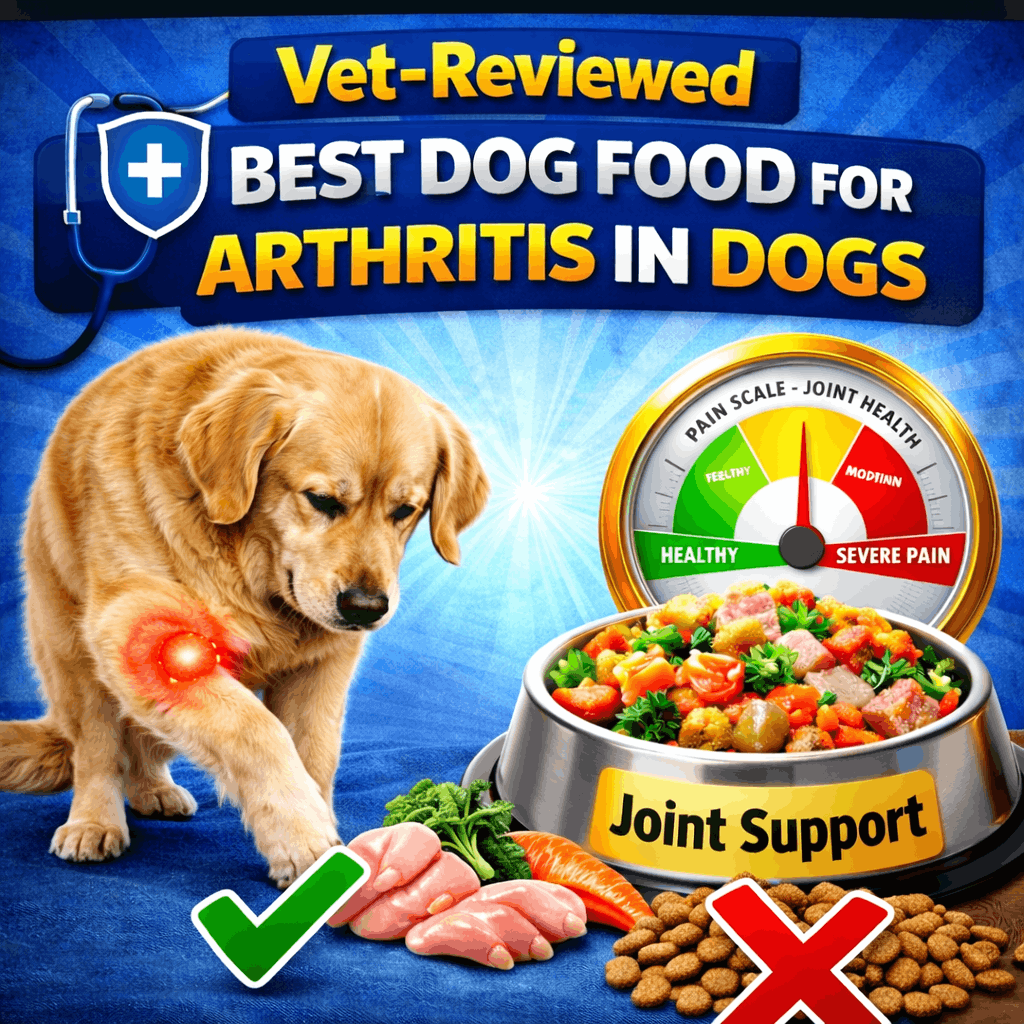
Arthritis is a common chronic condition affecting adult and senior dogs. While medication helps to manage pain, nutrition is the foundation of long-term joint management. Joint health dog food diet reduces inflammation, protects cartilage, controls body weight, and slows disease progression. This makes a big difference between declining mobility and maintaining quality of life.
As a practicing small animal clinician, I see daily how dietary management mistakes worsen arthritis, and also how proper feeding strategies improve comfort and activity levels. Let’s break down this scientifically and practically.
Vet-Approved Quick Answer
Canine arthritis nutrition plays a crucial role in managing pain and preserving long-term joint health. Veterinarians guided dietary interventions reduce joint inflammation, protect cartilage, and improve daily mobility in affected dogs.
- Dogs with arthritis should eat anti-inflammatory, joint support diets rich in omega-3 fatty acids (EPA/DHA), high-quality proteins, and controlled calories.
- Weight management is critical; even a 5-10 % weight loss in arthritic dogs shows significant improvement in pain and reduces joint load.
- Diet alone can not cure arthritis, but proper nutrition slows cartilage degeneration and improves mobility when combined with medical care
- Avoid high-fat, processed, and carbohydrate-rich foods because they promote inflammation
Why Dietary Management is Critical for Dogs With Arthritis
Arthritis is not just “joint wear and tear disease.” It is a chronic inflammatory condition that involves cartilage breakdown, synovial inflammation, and bone remodeling.
Over time, this ongoing inflammation leads to progressive pain, stiffness, reduced mobility, and loss of joint function. This significantly affects a dog’s daily activities and quality of life.
From a clinical perspective, joint management starts with controlling inflammation before focusing on cartilage support. Omega-3 fatty acids (EPA/DHA) are considered first-line nutritional therapy because they reduce inflammatory mediators and improve mobility. Glucosamine and chondroitin act as long-term chondroprotective supplements and are best used as supportive therapy rather than primary pain control.
From a nutritional standpoint, three major processes are occurring:
1. Chronic Inflammation
How Nutrition Helps Reduce Joint Inflammation In Dogs
Inflammatory mediators such as prostaglandins and cytokines damage joint tissues over time. Diet directly influences this inflammatory cascade.
- Omega-3 fatty acids (EPA and DHA) from fish oil actively suppress pro-inflammatory pathways. This results in the production of less inflammatory prostaglandin, reducing joint swelling.
- High omega-6 to omega-3 ratios promote the prostaglandin production, which amplifies joint inflammation and worsens arthritis symptoms. Artificial preservatives, refined carbohydrates, and low-quality fillers further contribute to systemic inflammation and metabolic stress.
- Antioxidants- rich nutrients such as vitamin E, Vitamin C, selenium, and polyphenols help to neutralize free radicals produced during chronic inflammation
2. Cartilage Degeneration
Amino acids, sulfur compounds, antioxidants, and micronutrients are critical for the integrity of cartilage and repair microdamage.
- Glucosamine, chondroitin, and MSM act as building blocks for glycosaminoglycans and proteoglycans, which maintain cartilage elasticity and shock absorption. Regular supplementation of these compounds has been shown to improve joint lubrication, reduce stiffness, and support long-term joint function in arthritic dogs.
- Adequate high-quality protein intake is necessary for collagen synthesis and joint tissue repair
- Trace minerals such as zinc, copper, and manganese act as cofactors in cartilage and connective tissue metabolism, help in collagen formation, tissue regeneration, and joint resilience.
3. Metabolic Stress
Overweight dogs produce inflammatory hormones such as adipokines that worsen joint disease. This is why nutrition and arthritis management are inseparable.
- Every pound of excess body weight adds mechanical stress to already damaged joints and accelerates cartilage breakdown. Studies show that each pound lost removes roughly four pounds of pressure from joints during movement.
- A calorie-controlled diet helps reduce joint pressure and improve mobility in overweight arthritic dogs
- Stable blood sugar control reduces systemic inflammation and supports better energy utilization in senior and arthritic dogs.
In clinical practice, arthritis dog diets often show measurable improvement within 4-8 weeks, even before treatment modifications are required. Improvements commonly include better mobility, reduced stiffness after rest, improved activity tolerance, and decreased pain-related behaviour.
Essential Nutrients In Dog Food For Arthritis In Dogs
A proper joint support diet works by reducing inflammation, protecting cartilage, and supporting muscle strength around affected joints.
These nutrients have the strongest clinical impact, slowing disease progression and improving joint function. Below are the core nutrients that must be present in a true joint-support diet.
| Nutrient | Clinical benefits |
| EPA/DHA (Omega-3) | Reduces joint inflammation, improves mobility, and decrease stiffness after rest |
| Glucosamine | Support cartilage maintenance and slow joint wear progression |
| Chondroitin | Helps protect cartilage structure and improves joint cushioning |
| MSM | Support joint comfort and help reduce inflammation-related pain |
| Antioxidants (Vitamin E, C, Selenium) | Protect joint tissues from oxidative damage and support long-term joint health |
| High-quality protein | Maintains muscle mass that stabilizes weak or painful joints. |
Table 1. Essential Nutrients In Dog Food For Arthritis In Dogs
Not all dog foods labeled “joint support” contain therapeutic omega-3 levels. Look for diets specifying EPA+DHA ≥ 0.3-0.5% on a dry matter basis (DMB). This is where consistent improvement in mobility and comfort is commonly observed.
Best Dog Food For Arthritis In Dogs By Disease Stage
Food for dogs with arthritis should be stage-specific. Feeding strategies that work for early joint stiffness often fail in advanced disease progression. Below is how veterinarians approach diet selection clinically.
Mild Arthritis (Early Joint Degeneration)
In early arthritis, joint damage is minimal, and inflammation is still low-grade. Nutritional intervention at this stage aims at slowing disease progression and normal joint function before permanent cartilage damage occurs.
Clinical Goal:
- Reduce low-grade inflammation
- Maintain lean muscle mass
- Prevent weight gain
- Delay disease progression
Recommended Diet Profile:
- Moderate fat (12-15% DM)
- Include High Omega-3 fatty acids
- High-quality animal protein
- Balanced calcium-phosphorus ratio
Food Types That Work Well
This section explains the type of dog food formulation that works best for arthritis management. It helps you to understand what kind of food choose, not specific brand
- Premium Joint Support Dry Kibble
- Fresh refrigerated diet withs with omega-3 enrichment
- High-quality senior maintenance diets
Once you understand the right food type, the next step is choosing a suitable commercial food option
Veterinarian Preferred Examples
This section lists the specific commercial products that match the above food types and are commonly use in veterinary practices. They serve as practical starting points for dog owners choosing arthritis-friendly diets
- Purina Pro Plan Adult Sensitive Skin & Stomach (Salmon) → Naturally higher in Omega-3 (EPA+DHA) content, highly digestible proteins
- Hill’s Science Diet Adult Healthy Mobility → Added glucosamine with moderate calorie control
- Freshpet Vital Balance Nutrition (Joint support variant) → Higher moisture improve palatabilty in older dogs.
Clinical Logic: At this stage, inflammation is mild, and cartilage damage is minimal. Nutritional focuses on anti-inflammatory support and metabolic stability rather than aggressive therapeutic dosing.
Moderate Arthritis (Established Joint Disease)
At this stage, structural joint changes are present, and daily discomfort becomes more noticeable. Diet must now shift from preventive support to active inflammation control and metabolic joint protection
Clinical Goal
- Actively suppress joint inflammation
- Control body weight
- Support cartilage metabolism
- Improve daily mobility
Recommended Diet Profile:
- Therapeutic omega-3 dosing
- Controlled calories
- Added joint nutraceuticals
- High digestibility
Food Type That Performs Best:
- Veterinary therapeutic mobility diets
- Prescription joint formulas
- High-EPA clinical nutrition diets
Veterinarian Recommended options:
- Hill’s Prescription Diet j/d → Clinically proven omega-3 concentration for inflammation reduction
- Royal Canine Mobility Support → balanced EPA/DHA+ antioxidant blend
- Purina Pro Veterinary Diets JM Joint Mobility → High protein+ therapeutic fatty acid ratio
Clinical logic: At this stage, retail joint foods often underdose omega-3. Prescription diets provide a medically effective concentration of fatty acids, which directly improve joint lubrication and pain score
Severe Arthritis (Advanced Degenerative Joint Disease)
Advanced arthritis involves significant cartilage loss and joint remodeling, as well as chronic pain. Nutrition at this stage becomes part of comfort-focused medical management, aiming to preserve mobility and improve quality of life.
Clinical Goal:
- Maximize comfort
- Preserve muscle mass
- Reduce reliance on pain medications
- Support the fragile senior metabolism
Recommended Diet profile:
- Highly digestible protein
- High omega-3 therapeutic levels
- Moderate fat
- Calorie-restricted but nutrient-dense
Food Types Commonly Used Clinically:
- Prescription mobility diets
- Soft-texture canned therapeutic diets
- Freshly cooked veterinary-formulated diets
Veterinarian-Favored Choices:
- Hill’s j/d Canned Formula → Easier chewing+anti-inflammatory support
- Royal Canine Mobility Support Wet Food → Higher moisture aids hydration and palatability
- Balance IT+Veterinary Homemade Diet Plans → Used when commercial diets are poorly tolerated
Clinical Logic: Advanced arthritis patients often struggle with appetite, chewing, and muscle loss. Diet must support comfort, digestibility, and lean tissue preservation rather than aggressive calorie intake.
Weight Management For Joint Health
Obesity is the single most correctable risk factor in canine arthritis. In clinical practice, overweight arthritis dogs improve faster from weight loss than from supplementation alone.
Why Fat Tissues Worsen Arthritis
Fat is metabolically active. It produces inflammatory hormones that:
- Increases joint inflammation
- Delay cartilage repair
- Increase pain sensitivity
Clinically Feeding Rule
Always calculate food intake based on the ideal target weight, and not the current obese weight. This principle alone prevents most feeding failure. For example, if a dog weighs 30kg, but the ideal weight is 24 kg, feeding must be calculated for 24kg, not for 30kg
Maintaining a healthy weight is critical for dogs with arthritis, as excess body fat adds stress to painful joints and worsens inflammation. For a deeper guide on reducing canine obesity, see our article on Obesity management in dogs
Senior Dog Diet Plan For Joint Pain
Senior dogs with joint pain need additional nutrition due to age-related muscle loss, slower metabolism, and reduced nutrient absorption. A targeted best dog food for joint pain helps to maintain mobility, stabilize joints, and delay the decline in mobility and normal physical function
Sarcopenia (Age-Related Muscle Loss)
Loss of muscle mass worsens the joint instability and increases stress on already damaged joints. A senior arthritic diet for dogs requires:
- High-quality protein
- Better amino acid digestibility
- Adequate calorie control
Maintaining muscle mass helps absorb joint impact and improve balance, reducing fall and injury risk
Protein Protection Strategy
Old advice suggested a low-protein diet for senior dogs. Clinically, this worsens muscle loss. Insufficient dietary protein intake accelerates sarcopenia, weakens joint-supporting muscles, and reduces overall physical strength, leading to rapid progression to immobility in senior dogs. Instead:
- Maintain moderate to high protein intake
- Reduce calories from carbohydrates and fats
- Preserve lean muscle mass
- Prioritize animal-based protein with biological value
This approach supports strength while avoiding unnecessary calorie overload.
Calorie Control Without Malnutrition
Senior arthritic dogs often move less but still require full micronutrient and joint support nutrition. This preserves mobility longer and prevents obesity-related joint stress.
- Use nutrient-dense diets that provide joint supplements without excess calories.
- Avoid overfeeding treats and table scraps
- Adjust the portion size based on ideal body weight, not current overweight status.
The goal is not weight loss alone; it is maintaining strength and mobility, while minimizing pain and functional decline in aging dogs
Veterinary Prescription Diet Vs Over-The-Counter Joint Diets
Both options have roles in arthritis management, but they are not clinically equivalent and should not be used interchangeably. Choosing the wrong category often leads to unrealistic expectations and delayed improvement.
Prescription Joint Diets
Advantages
- Therapeutic omega-3 levels specifically formulated for inflammation control
- Clinical trials supporting mobility improvement and pain reduction
- Precise nutrient ratios optimized for joint metabolism and cartilage protection
- Controlled calorie density to support weight management in arthritic dogs
Best Suited For
- Moderate to severe arthritis cases
- Dogs requiring a measurable anti-inflammatory dietary effect
- Patient is already on long-term pain management protocols
These diets are designed to act as nutritional therapy, not just maintenance food
Non-Prescription Joint Diet
Premium retail diet may help mild or early-stage cases, but often contains:
- Lower omega-3 dosing below therapeutic thresholds
- Marketing level joint ingredients with minimal clinical impact
- Inconsistent formulation standard across brands
- Less strict quality control compared to prescription diets
They work best for:
- Early joint stiffness
- Preventive joint support
- Young or middle-aged dogs are at risk of arthritis
These diets support more as supportive nutrition, not primary arthritis treatment.
Prescription diets are formulated to produce measurable therapeutic effects, while over-the-counter joint foods are designed mainly for general joint support and maintanace
How Much To Feed Dogs With Arthritis
Feeding quantity is as important as food type in arthritis management.
Portion Calculation Rule
Always calculate daily food intake based on:
- Ideal body weight (not current overweight body mass)
- Activity level
- Age and metabolic condition
Never free-feed arthritic dogs; it promotes uncontrolled weight gain and worsens joint loading.
Meal Frequency
Split daily intake into:
- 2 meals for stable adult dogs
- 3 smaller meals for overweight or senior dogs
This improves digestion, reduces insulin spikes, and maintains energy levels.
Monitoring & Adjustment
Re-evaluate body condition score (BCS) every 2-4 weeks and adjust portion accordingly. This is standard clinical practice in a long-term arthritis management programme. Target BCS: 4-5/9 for optimal joint load reduction
Common Mistakes When Feeding Dogs With Arthritis
These are mistakes I see repeatedly in clinical practice:
- Overloading “Joint Supplements” Through Food, adding multiple fortified foods and supplements together can cause nutrient imbalance, especially excess calcium, vitamin D, and omega-6 fats
- Using High-Fat Diets, some owners believe fat improves energy. In arthritis, excess fat increases inflammation, worsens obesity, and accelerates joint stress
- Ignoring weight gain, many pet parents accept gradual weight gain as “normal aging.” This silently increases joint pressure and speeds up cartilage degeneration.
- Switching Foods Too Frequently. Frequent diet changes disrupt gut health, feeding compliance, and nutrient consistency.
- Treat Overfeeding, unaccounted treat often contributes to 20-30% of daily calories. This alone can cancel the benefits of therapeuctic arthritis diet. Calorie intake of treats should stay below 10% of daily intake
When Arthritis Symptoms Need Immediate Veterinary Attention
Diet supports the arthritis, but it does not replace the medical evaluation. Seek veterinary care immediately if your dog shows the following signs:
- Sudden inability to stand
- Severe pain vocalization
- Joint swelling with fever
- Rapid worsening lameness
- loss of appetite associated with pain
These signs may indicate ligament rupture, joint infection, spinal disease, or neurological conditions, and not simple osteoarthritis.
Frequently Asked Questions
1. What Should I Feed My Dog With Arthritis?
Feed an anti-inflammatory joint support diet containing omega-3 fatty acids, high-quality protein, controlled calories, and cartilage support nutrients
2. Can Homemade Food Help Arthritis?
Yes, but only if formulated by a veterinary nutritionist. Improper homemade diets often lack calcium balance, omega-3 ratios, and micronutrients necessary for joint health.
3. Is Grain-Free Good For Joint Pain?
Grain-free does not automatically improve arthritis. What matters is fat quality, omega-3 content, calorie control, and protein quality. Some grain-free diets are higher in fat and worsen inflammation.
4. Can Arthritis Be Reversed With Diet?
No. Arthritis can not be reversed. However, proper nutrition can slow progression, reduce pain, improve mobility, and extend quality of life significantly.
5. What Foods Worsen Arthritis?
Avoid:
1. High-fat diets
2. Excessive treats
3. Table scraps
4. Sugary human foods
5. Highly processed low-quality kibble
These increase inflammation and weight gain
6. What Is The Most Important Nutrient For a Dog With Arthritis?
Omega-3 fatty acids (EPA+DHA) are the most crucial nutrients for an arthritis diet for dogs. As a practicing veterinarian, I prioritize marine-based omega-3 fatty acids because they directly inhibit the inflammatory enzymes that cause joint pain. Unlike standard supplements, therapeutic levels of EPA/DHA can significantly reduce a dog’s reliance on daily pain medications.
7. Should I Give My Dog Glucosamine or Omega-3 for Joint Pain?
For active pain relief. Omega-3s are the best choice for supporting cartilage and alleviating pain. Glucosamine helps maintain the “shock absorber” quality of joints. In my clinical practice, I recommend a combination for a “total joint” approach.
8. Does Protein Help Dogs With Arthritic Joints?
Yes, high-quality animal protein is essential to prevent muscle wasting or sarcopenia. Arthritis dogs need stronger muscles to stabilize their weak joints. High-quality protein maintains lean muscle mass and acts as a supporter to joints, which is necessary for mobility.
9. Can Antioxidants Slow Down the Progression of Canine Arthritis?
Yes, antioxidants like Vitamin E and Selenium protect joint tissues from oxidative stress. Chronic joint inflammation creates “free radicals” that eat away at healthy cartilage. Including antioxidants in your dog’s diet acts as a metabolic shield, slowing down the permanent damage to the joint capsule.
Final Clinical Perspective
Arthritis nutrition is not about chasing trendy ingredients. It is about:
- Reducing inflammation
- Protecting cartilage
- Maintaining muscle mass
- Controlling body weight
- Supporting long-term mobility
When implemented correctly, diet becomes a powerful medical tool, not just food.
This content is intended for educational and informational purposes only and does not replace professional veterinary diagnosis, treatment, or personalized nutrition planning. Every dog’s medical condition, age, breed, and health status is different. Always consult your licensed veterinarian or a board-certified veterinary nutritionist before making significant dietary changes or starting any therapeutic diet for a dog with arthritis.
