
Vet-Approved Quick Answer
There is no single “best food” for obese dogs. An effective weight loss dog food for dogs with obesity in dogs is formulated to reduce excess fat, provide high-quality protein to preserve lean muscle mass, and include adequate fiber to promote satiety while maintaining complete and balanced nutrition.
Veterinarian-formulated dog food for obesity in dogs is designed to support safe, controlled, medically supervised weight loss with a nutrient profile that promotes satiety and metabolic stability, rather than rapid calorie restriction.
Long-term weight loss success depends on gradual dietary adjustments with regular body condition score monitoring and not aggressive feeding restriction.
Effective weight loss diets are characterized by:
- Controlled calorie intake
- High-quality protein to preserve lean mass
- Adequate fiber for satiety
- Nutrient density despite calorie restriction
- Regular reassessment as weight and body condition change
In clinical practice, diet choice must be adjusted according to the dog’s response, rather than remaining the same fixed food.
Why Is Obesity In Dogs A Medical Condition?
Canine obesity is no longer an occasional lifestyle issue. In clinical practice, overweight and obese dogs now represent one of the most common chronic conditions. What many dog parents do not realize is that obesity is not only fat accumulation in the body.
According to veterinary metabolic research, obesity in dogs is a chronic metabolic disease rather than a simple result of overeating. It is a metabolic disease that affects metabolism, joints, hormones, and organs, increasing the risk of chronic diseases and affecting longevity.
Clinical studies show that obesity in dogs alters
- Insulin sensitivity and glucose regulation
- Inflammatory cytokine levels
- Joint function and cartilage health
- Respiratory efficiency
- Longevity
Most obese dogs we see clinically are not just “overfed.” Veterinary endocrinology research confirms that obese dogs often become metabolically inefficient. It means the same calories now produce fat gain instead of energy utilization.
Effective weight loss is not achieved by “feeding less.” It requires careful protein management, metabolic control, and disease-specific diet selection.
Most dogs require a vet-supervised weight-loss diet adjusted every 4–6 weeks based on body condition score. This veterinarian-reviewed guide on dog food for obesity in dogs highlights how you can choose the weight loss diet for dogs.
Why Canine Obesity Is More Than Just Extra Fat
Obesity develops when energy intake exceeds energy use over time. However, clinical nutrition research shows that obesity is rarely caused by a single factor.
Common contributing factors include,
- Carbohydrate-rich commercial diet
- Neutering-related metabolic slowdown
- Breed predisposition (Labrador Retrievers, Beagles, Pugs)
- Sedentary and inactive lifestyle
- Excessive treat consumption
Over time, fat tissue becomes hormonally active. It releases inflammatory mediators that worsen arthritis, insulin resistance, cardiac strain, and immune stress. This is why obesity must be managed medically, not cosmetically.
Vet Insight: Why Labradors and Golden Retrievers Are Genetically Prone To Obesity
Breeds such as the Labrador Retriever and the Golden Retriever carry a known POMC gene mutation, which affects appetite regulation and satiety signaling. This mutation makes affected dogs feel less “full” after eating, increasing food-seeking behaviour and calorie intake. In clinical practice, these breeds also tend to have lower satiety control, strong food motivation, and reduced spontaneous activity, which, together, create a higher risk for fat accumulation even when fed a standard portion size. As a result, these dogs often require strict portion control, high-protein weight management diets, and a daily exercise routine to maintain a healthy body condition.
How BCS And Body Fat Percentage Measures Canine Obesity
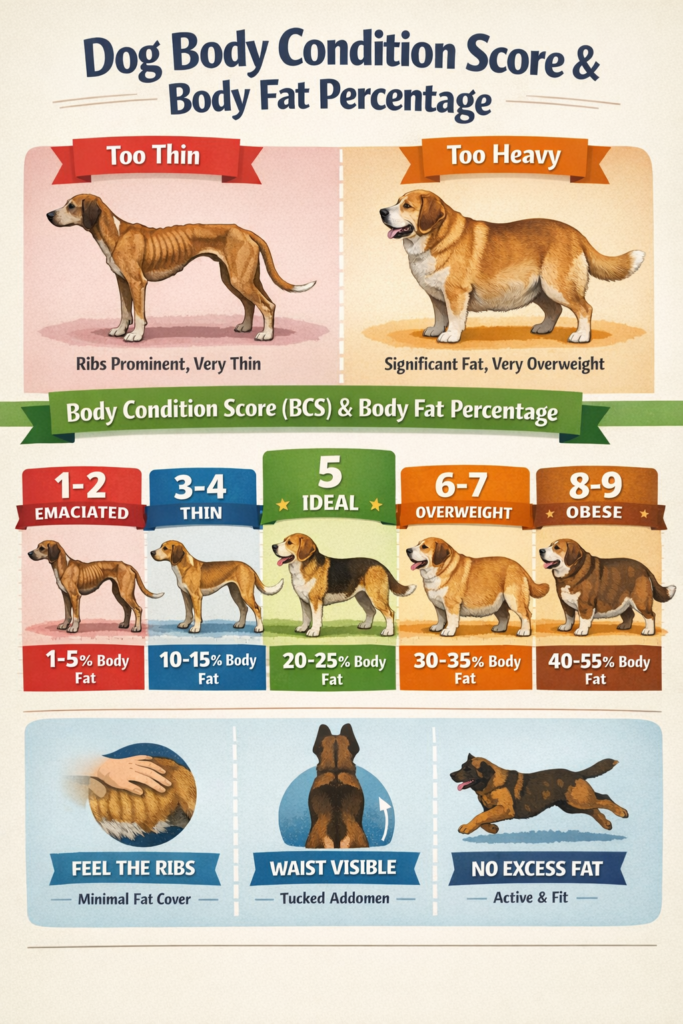
Note:- Body fat percentages are estimates and may vary slightly by breed, body composition, and muscle mass. Veterinarians use BCS alongside physical examination and clinical judgment rather than as a standalone diagnostic number.
Veterinarians do not rely on body weight alone. Instead, we use the WASAVA guidelines on the body condition score (BCS) system, a standardized clinical tool that evaluates visible fat coverage and body shape to estimate a dog’s true body fat percentage more accurately than the scale alone.
A dog at BCS 8–9 may be carrying more than 35–40% excess body fat, which significantly increases disease risk. This classification determines how aggressively nutrition must be modified.
Clinical Nutrition Goals of Veterinary Weight Loss In Obese Dogs
An effective weight loss diet for dogs is not achieved by simply feeding “less food.” From a clinical perspective, obesity management focuses on reducing body fat while preserving lean muscle mass, metabolic function, and long-term health.
A properly designed weight loss diet for obese dogs must control calories without compromising essential nutrients. Veterinarians evaluate weight management diets using four core nutritional goals.
1. Preserve Lean Muscle Mass
During calorie restriction, dogs naturally lose both fat and muscle tissue. Excessive muscle loss slows metabolism and increases the risk of weight regain.
Clinical strategy:
- Maintain high-quality protein intake
- Ensure adequate amino acid supply
- Avoid a very low-calorie diet and low-protein formulations.
Muscle preservation is especially critical in senior dogs and obese dogs with joint disease.
2. Reduce Caloric Density
Obese dogs often struggle with constant hunger during a diet programme, which leads to food-seeking behaviour and poor long-term owner compliance.
In clinical practice, this is one of the most common reasons weight loss plans fail. It is not because the canine obesity diet is ineffective, but because it is not biological sutainable for the dogs.
Clinical strategy:
- Select canine obesity diets with lower energy density (kcal per gram)
- Increase food volume using fiber and moisture
- Avoid high-fat formulation
Lower calorie density allows larger meal portions while maintaining a calorie deficit
3. Improving Satiety
Sustainable weight loss nutrition for overweight dogs depends on how well the dog tolerates the diet behaviorally or physiologically.
Clinical strategy:
- Use moderate-to-high fiber levels
- Prefer a soluble and fermentable fiber blend
- Support gut health to reduce hunger signaling.
Better satiety reduces food-seeking and begging behaviour and improves long-term adherence.
4. Support Metabolic or Joint Health
Obese dogs frequently suffer from low-grade inflammation, reduced mobility, joint overload, and developing insulin resistance, which together accelerates progression of arthritis, metabolic disorder, and cardiovascular strain.
Over time, excess adipose tissue also acts as an active endocrine organ, releasing inflammatory cytokines that worsen pain sensitivity, slow recovery from injury, and impair overall immune function.
Clinical strategy:
- Include omega-3-fatty acids (EPA/DHA)
- Canine obesity diet maintains micro-nutrient adequacy despite calorie restriction.
- Support mobility to encourage physical activity
A weight loss diet for obese dogs should improve the quality of life and help the patients.
Excess weight doesn’t just affect overall health; it also increases stress on joints and accelerates arthritis progression. Learn more about how diet supports joint health in our dog food for arthritis guide
Therapeutic Nutrient Target For Canine Weight Loss
Veterinary weight management diets are selected using nutrient ranges rather than marketing labels such as “light” or “low calorie.” The values below represent commonly accepted clinical targets used in an obesity treatment programme.
| Nutrient | Ideal Target Range | Purpose |
| Protein | 25-35% | Preserve lean muscle mass, maintain metabolism, and improve satiety during calorie restriction. |
| Fat | 8-12% | Reduce calorie density while maintaining essential fatty acid intake |
| Crude Fiber | 8-15% | Increases fullness, slows gastric emptying, and improves feeding compliance |
| Carbohydrates | Moderate, low glycemic sources | Provide controlled energy without promoting fat storage or insulin spike |
| Calorie Density | 2.8-3.2kcal/g (Dry food) | Allows adequate meal volume with reduce calorie intake |
| Omega-3(EPA+DHA) | ≥0.3-0.5% | Reduce inflammation, support joint mobility, improves metabolic health |
| Moisture (Wet diet) | 70-80% | Enhance satiety and lower calories per feeding volume |
All values are expressed on a dry matter basis unless stated otherwise
How Vets Use Weight Loss Therapeutic Nutrition For Overweight Dogs
These nutrient targets are not a rigid rule, but clinically guided ranges that allow veterinarians to individualize weight loss programmes based on the dog’s metabolic status, concurrent disease burden, and lifestyle factors.
In clinical practice, no two obese dogs receive the exact same nutritional prescription. Diet selection and formulation are typically adjusted according to:
- Obesity severity (BCS 6-9/9) and measured body fat percentage.
- Age, breed size, and baseline muscle mass
- Daily activity level andmobility limitation
- Presence of comorbidities such as arthritis, diabetes mellitus, early kidney disease, hypothyroidism, or liver dysfunction
- Gastrointestinal tolerance, stool quality, and history of food sensitivity
Nutrition Management of Obese Dogs With Concurrent Osteoarthritis
For example, a severely obese dog with osteoarthritis requires high-quality protein to preserve lean tissue, along with elevated omega-3 fatty acid levels to reduce joint inflammation and improve mobility during weight loss.
In contrast, an obese diabetic dog benefits from tighter carbohydrate control, increased dietary fiber to blunt post-meal glucose spike, and slower gastric emptying to stabilize blood curves.
Weight Loss Nutrition Diet For Senior Obese Dogs
In clinical practice, senior obese dogs present another common clinical challenge. Age-related sarcopenia (muscle loss) can accelerates rapidaly during calorie restriction.
For such dogs, the veterinarian intentionally targets the upper protein range while carefully managing fat and total calorie intake to prevent functional muscle decline and weakness.
Beyond nutrient percentage, clinicians also evaluate:
- Meal frequency and portion distribution to reduce hunger-driven behaviour
- Volumetric feeding strategies (high fiber and water content) to increase satiety
- Owner compliance factor, including feeding habits, treat usage, and household food sharing
- Expected weekly weight loss rate, typically targeting 0.5-1.5% of body weight per week for safety.
Important Clinical Note
Always evaluate the nutrient value on a dry matter basis (DMB) rather than relying on an “as fed” basis label percentage. Moisture content can significantly distort apparent protein, fat, and fiber levels, particularly when comparing dry kibble with canned or fresh diets. Accurate DMB comparison is essential for making therapeutic diet decisions
Best Weight Loss Diet For Dogs Based On Obesity Level
This is where practical clinical decision-making begins. In veterinary practice, weight management diet never approached with a one-diet-fits-all strategy.
Effective obesity treatment require indivisualized diet selection based on body condition score (BCS), metabolic demand, activity level, and presence of concurrent disease.
This structural approach of canine obesity diet ensures safe fat loss, muscle preservation, and long-term metabolic stability rather than short term weight fluctiations
Mild Overweight Dogs (BCS 6-7)
Dogs in this category usually respond well to controlled calorie adjustment without aggressive restriction. The primary clinical goal is to reverse early fat accumulation while maintaining normal physiological function.
Key nutritional objectives include:
- Moderate calorie restriction to create a healthy energy deficit
- Adequate high-quality protein intake to preserve lean muscle mass
- Increased dietary fiber to improve satiety and reduce voluntary overconsumption
Veterinarian-Recommended Weight Control Diets For Obesity In Dogs
These diets are more appropriate when:
- Activity levels remain reasonable
- No endocrine or metabolic disorder is present
- Weight gain, recent or mild
For dogs in this category, the veterinarian typically recommends starting with non-prescription weight loss dog food formulated for gradual fat reduction and muscle preservation rather than jumping directly to a therapeutic diet
Clinical logic: Early intervention at this stage prevents progression into metabolic obesity and reduces the need for prescription-level therapeutic diets.
Clinically Obese Dogs’ Weight Loss Diets (BCS 8-9)
Dogs with advanced obesity require therapeutic nutritional intervention, not standard retail weight management formulas.
At this stage, metabolic adaptation, appetite dysregulation, and muscle loss risk become major clinical concerns.
Veterinary-Recommended Prescription Options
These clinical diets are specially formulated to:
- Preserve lean muscle mass during calorie restriction
- Promote fat loss rather than water or muscle loss
- Improve hunger control through fiber and protein modulation
- Support metabolic adaptation and prevent rebound weight gain
For dogs with BCS 8-9 obesity, the veterinarian typically transitions to prescription weight loss dog food designed for therapeutic fat reduction and appetite control, as these formulas are clinically tested to deliver safe, long-term results
Clinical logic: Prescription obesity diets are designed to produce sustained fat loss while minimizing hormonal and metabolic resistance to weight reduction
Obesity Management in Dogs With Concurrent Disease
In real-world veterinary practice, obesity rarely occurs in isolation. Concurrent disease significantly alters dietary requirements, making standard weight loss strategies inappropriate for many patients.
1. Obesity With Arthritis or Joint Disease
Excess body weight increases joint load exponentially, accelerates cartilage degeneration, and worsens pain. Even a small increase in body mass significantly raises compressive forces on the hips, knees, and elbow joints, leading to reduced mobility and faster progression of osteoarthritis.
Over time, this create vicious cycle where pain reduces activity, further promoting weight gain.
Clinically Preferred Dietary Food Options
These formulas are designed to provide:
- Controlled weight reduction
- Omega-3 fatty acids for anti-inflammatory support
- Nutrients that support cartilage health and joint function
For dogs suffering from both obesity and joint disease, veterinarians often recommend transitions to dog food formulated specifically for arthritis and mobility support, as these diets combine weight control with targeted joint protective nutrients.
Clinical logic: Reducing body weight by even 5-10% can significantly decrease joint stress and improve mobility outcomes.
2. Obesity With Diabetes
For diabetic dogs, blood glucose regulation becomes the primary nutritional priority, not just calorie reduction.
Poor dietary control can trigger a post-meal glucose spike, increase insulin resistance, and accelerate long-term complications such as neuropathy, cataract, and organ stress. Stabilizing blood sugar levels while achieving gradual fat loss is essential for safe metabolic control.
Veterinarian-Recommended Dietary Option
These diets emphasize:
- Low glycemic carbohydrate sources
- High-soluble and insoluble fiber to slow glucose absorption
- Controlled calorie delivery with consistent energy release
For obese diabetic dogs, veterinarians typically recommend transitions to dog food formulated for diabetic management, as these diets are designed to improve glycemic stability while supporting healthy weight reduction.
Clinical logic: Stabilizing post-meal glucose spikes improves insulin response and reduces long-term diabetic complications
3. Obesity With Kidney Stress
Some obese dogs show early renal compromise or age-related kidney changes. Excess body fat increases systemic inflammation and alters renal blood flow, placing additional strain on already vulnerable kidney tissues.
If weight loss is poorly managed, aggressive protein restriction or rapid fat mobilization may further compromise renal function.
Veterinarian-Recommended Dietary Options for Kidney Stress
Dietary management focuses on:
- Moderate high-quality protein intake
- controlled phosphorus levels
- Calorie restriction without increasing renal workload
- Maintenance of hydration and electrolyte balance
For obese dogs with early kidney stress, veterinarians often recommed tranisitions to kidney support dog food formulated for renal protection and metabolic stability, rather than using standard weight loss formulas.
Clinical logic: Gradual fat loss combined with renal protective nutrition helps slow kidney disease progression while maintaining safe metabolic function during weight reduction
4. Obesity With Liver Disease
Rapid weight loss can trigger hepatic dysfunction and lead to metabolic instability.
Sudden fat mobilization increases the hepatic processing burden, raising the risk of fat accumulation within liver cells and impairing the normal detoxification pathway
In severe cases, very aggressive calorie restriction can contribute to hepatic lipidosis and delayed recovery
Veterinary-Supported Dietary Options
Dietary management focuses on:
- Hepatic support diets with controlled fat content
- Gradual, supervised calorie reduction
- Avoidance of extreme restriction protocols
For obese dogs with liver compromise, veterinarians often recommend a transition to dog food formulated for liver disease management, rather than using aggressive weight loss formulas
Clinical logic: Slow, supervised weight reduction minimizes hepatic stress, improves metabolic tolerance, and supports long-term liver recovery while still achieving safe fat loss
5. Obesity With Digestive Sensitivity
Some obese dogs develop gastrointestinal symptoms such as diarrhea, bloating, flatulence, or poor stool quality when placed on traditional high-fiber weight loss diets.
Rapid dietary changes and excessive fiber loads can disrupt gut microbiota balance and reduce nutrient absorption, making weight loss plans difficult to sustain.
In these patients, maintaining digestive tolerance while achieving gradual fat loss becomes the primary nutritional objective.
Veterinary Preferred Dietary Options
For digestive sensitivity, calorie control:
For microbiome support and moderate fiber:
For food intolerance or ingredient sensitivity (Limited ingredient options)
These nutritional strategies focus on:
- Improving nutrient absorption efficiency
- Reducing gastrointestinal irritation
- Supporting healthy gut bacteria
- Preventing diet-related diarrhea during calorie restriction
For obese dogs with digestive sensitivity, veterinarians often recommend using sensitive stomach dog food formulated for improved digestibility, or transitioning to limited ingredient dog food when food tolerance is suspected, rather than standard high-fiber obesity diets.
Clinical logic: Preserving GI stability improves diet compliance, reduces feeding interruptions, and allows consistent long-term weight loss without triggering recurrent digestive flare-ups.
