Clinical Quick Summary Pancreatitis in dogs is inflammation of the pancreas gland. One of the most common and serious GI emergency in dogs. It is mainly triggered by a high-fat meal, medications, obesity or breed specific lipid disorder. Dogs with pancreatitis require a low fat diet, highly digestible food, small frequent meals, and life long dietary management. Even single high fat meal can trigger a relapse. Early diagnosis and right dietary management reduce the risk of recurrence.
1. What Is Pancreas And Why Does It Matter
The pancreas is a vital leaf-shaped organ located below the stomach, alongside the duodenum. Without a functioning pancreas, your dog cannot digest fat or control blood glucose. Despite its small size, it has two crucial function
- Exocrine function: It produces digestive enzymes such as lipase, protease, amylase which activate in the duodenum to breakdown proteins, fats, and carbohydrates
- Endocrine function: It contains the islets of Langerhans cells, which secrete insulin and glucagon to regulate blood glucose
In normal conditions, digestive enzymes remains inactive (stored as zymogens) until they reach the intestine. In pancreatitis, this protective mechanism fails and these enzymes activate prematurely inside the pancreas itself.
Which trigger the destructive process of autodigestion in duodenum, local inflammation, and in severe cases systemic inflammatory response syndrome[1] (SIRS)
Vet Alert: Severe acute pancreatitis can lead to shock, DIC (disseminated intravascular coagulation), and multi-organ failure. Any dog showing severe vomiting, anorexia needs an emergency vet visit advise and not a ‘wait and watch’ approach
2.Acute or Chronic Pancreatitis? How to Tell and Why It Changes Everything
Understanding whether your dog has acute or chronic pancreatitis episode determine the urgency and long-term management plan[2]. The table below outlines the key distinctions
| Feature | Acute Pancreatitis | Chronic Pancreatitis |
|---|---|---|
| Onset | Sudden, within hours | Gradual, over weeks–months |
| Severity | Mild to life-threatening | Usually mild to moderate |
| Key Signs | Vomiting, abdominal pain, lethargy | Intermittent vomiting, weight loss, diarrhea |
| Pancreatic damage | Reversible if managed early | Cumulative; fibrosis over time |
| Recurrence risk | High without diet change | Frequent; lifelong management needed |
| Common causes | High-fat diets, dietary indiscretion, obesity | Repeated acute episodes |
| Risk Of EPI | Low | High (as scars replace functional tissue) |
| Risk of Diabetes Mellitus | Low | High |
| Diagnostic test | cPLI, serum lipase/amylase, ultrasound | cPLI, ultrasound, histopathology |
Important: About 65–70% of canine pancreatitis cases are classified as chronic[3]. Many owners discover their dog has chronic pancreatitis only after a second or third acute flare so dietary management cannot be paused after the first recovery
3.What are Causes and Risk Factors in Pancreatitis?
Pancreatitis in dogs is commonly triggered by high-fat diets, sudden food changes, or underlying health issues with recognize risk factors including obesity, certain breeds predisposition, medications, and metabolic diseases.
3.1 Dietary Triggers (Most Common)
A single high-fat meal, table scraps, high-fat meat scraps, buttered food or pork are the most common culprit of acute trigger.
The mechanism: When dog eats a high-fat meal, the body release a hormone cholecystokinin (CCK), which signal pancreas to secrete large amount of digestive enzymes. When fat load is excessive, premature enzyme activation occurs and affect pancreas[4]
3.2 Breed Predisposition
Genetic factors play a significant role in certain breeds. Miniature Schnauzers, carry a mutation in the SPINK 1 gene (serine protease inhibitor Kazal type 1) associated with impaired enzyme regulation, and commonly reported with concurrent hypertriglyceridemia[5]
| Breed | Primary Risk Factor | Risk Level |
|---|---|---|
| Miniature Schnauzer | Hypertriglyceridemia (SPINK1 mutation) | Very High |
| English Cocker Spaniel | Immune-mediated, genetic predisposition | High |
| Yorkshire Terrier | Hypertriglyceridemia, small body mass | High |
| Cavalier King Charles | Obesity tendency, breed metabolism | Moderate-High |
| Boxer | Dietary indiscretion, GI sensitivity | Moderate |
| Mixed Breed | Diet, obesity, idiopathic | Baseline |
| A Note on English Cocker Spaniels: |
| Unlike other high-risk breeds where dietary fat drives pancreatitis, English Cocker Spaniels develop a clinically distinct, immune-mediated form of chronic pancreatitis. Histopathological examination shows lymphocytic infiltration rather than neutrophilic inflammation which indicate autoimmune component. Even well-controlled dietary fat intake may not fully prevent disease progression in this breed[6] |
3.3 Medications
Several commonly prescribed medications in dogs carry documented pancreatitis risk:
- Corticosteroid (prednisone/dexamethasone) increase the risk with long-term or high dose use
- L-asparaginase used in chemotherapy protocol in lymphoma
- Potassium bromide commonly used anticonvulsant in epileptic dogs
- Tetracycline antibiotics occasional association link with pancreatitis[7]
For dogs on long-term use of these medications, regular veterinary monitoring can identify early signs of pancreatitis and reduce risk
3.4 Concurrent Medical Conditions
Dietary indiscretion or high-fat meal is most common trigger of pancreatitis. For a recurrent or unexplained pancreatitis cases, underlying medical condition should be rule out, as they increase the risk of pancreatic inflammation.
Condition that impair lipid metabolism or alter hormonal balance substantially increase risk[8]:
- Hyperlipidemia/ hypertriglyceridemia reported in 20-40% pancreatitis cases
- Diabetes mellitus frequently co-occurs with pancreatitis, each condition can worsen each other
- Hypothyroidism impair the lipid clearance, leading to hypertriglyceridemia
- Hyperadrenocorticism (Cushing’s disease) increase the cortisol level which promote hyperlipidemia, which mimics the effect of exogenous steroids
- Hypercalcemia promotes premature activation of pancreatic enzymes and increase risk of pancreatitis in dogs
For successful management of pancreatitis in dogs requires treating the underlying health condition along side strict dietary fat control.
3.5 Obesity
Obesity put significant metabolic burden on multiple organs and impair normal function including pancreas. Obese dogs face approximately double the baseline risk of pancreatitis[9]
Excess adipose tissues promote chronic low-grade inflammation and lipid dysregulation which creates pro-inflammatory environment that increase risk of pancreatitis
As a result, weight management is therefore both preventive and therapeutic intervention that significantly reduce disease risk and improve overall health outcomes
3.6 Idiopathic Cases
In approximately 30–50% dogs with pancreatitis, no clear underlying trigger was identified.[10] These cases are classified as idiopathic pancreatitis after ruling out dietary, drug-related, and metabolic causes.
Despite unknown origin trigger the management remains same controlled dietary fat and close monitoring of symptoms remains essential for recovery and prevent recurrence.
Now that you know what causes pancreatitis, the next question most owner asks in the clinic is: “But how do I know that’s what it is?” Here’s what to watch for.
Common Signs of Pancreatitis in Dogs
Dog pancreatitis symptoms doesn’t always show same signs in every dog. Some dogs develop sudden, severe symptoms while other show mild changes that are easy to miss.
Recognizing these signs early is crucial because timely intervention can prevent the condition from becoming more serious. Here are the most common signs are watch for:
|
Acute Pancreatitis Signs
|
Chronic Pancreatitis Signs
|
|---|---|
Emergency Warning Signs
Clinical Note chronic pancreatitis in dogs can be clinically silent between flares. Regular cPLI monitoring every 6 months is advisable in high-risk breeds, even without overt symptoms
Pancreatitis can range from mild to life-threatening. Some signs mean you shouldn’t wait or monitor at home
Seek emergency veterinary care immediately if your dog shows:
- Vomiting more than 2-3 times within few hours
- Complete refusal to move or stand
- Rigid or extremely painful abdomen
- Pale or yellow-tinged gums
- Collapse or unresponsiveness
Symptom Severity: Is This an Emergency?
Use this quick guide to assess how urgent your dogs symptoms may be and to know whether immediate action is needed
When It’s Okay to Monitor at Home Signs to Watch Single episode of vomiting with mild lethargy Inappetence but still drinking water Soft stools without blood→ withhold water for 4-6 hours. Call vet if no improvement within 12 hours
Call Your Vet Today Watch For These Signs Vomiting 2-3 times in 12 hours with anorexia Hunched posture or reluctance to walk Not eaten in over 24 hours → Needs examination and likely blood work same day
Emergency Go to Vet Immediately If Vomiting 3-5 times in few hours + complete anorexia Rigid or painful abdomen Yellow gums or skin (jaundice), collapse, or unresponsiveness
Diagnosis What Tests Does Your Vet Run
What to Feed A Dog With Pancreatitis
How Much Fat Should a Dog with Pancreatitis Eat?
Dogs with pancreatitis fed a low-fat diet= <10% fat on a dry matter basis. In a severe or frequently recurring cases, target ≤8% DM fat provide better control and reduce risk of flare-ups.
Excessive dietary fat stimulates the pancreatic enzyme secretion, increasing workload and worsen inflammation. It also put additional metabolic stress on liver, especially in dogs with underlying hepatic dysfunction.
In dogs with concurrent liver disease, fat tolerance is often reduced, making precise fat restriction even more critical
Prescription diets like Hill’s i/d Low Fat achieve 7.7% DM fat clinically meaningful in reducing pancreatic workload
Why Converting to Dry Matter Basis (DMB) is Crucial for Accurate Dog Food Comparisons Canned food with 4% as-fed fat and 75% moisture actually equals~16% DM fat too high for pancreatitis management. DM Fat Formula: Fat% (DM) = [Fat% (as-fed) ÷ (100 – Moisture%)] × 100 Example: 4% fat, 75% moisture → [4 ÷ 25] × 100 = 16% DM fat
Why Low-Fat Diet Matters in Pancreatitis Dogs Clinically
- It reduces pancreatic enzyme stimulation
- Improve the digestion and better nutrition absorption
- Prevents inflammatory flare-ups
- Lowers recurrence risk
No medications will work if dietary fat intake remains high. Even the best drugs fail when the pancreas is continuously triggered by fat
How Often Should You Feed a Dog with Pancreatitis?
Rather than offering one or two large meals, divide daily ration into 3-4 smaller portions.
- This approach reduces the post-meal enzyme secretion spike (postprandial CCK surge)
- Limits gastric distention, so reduces stress on inflamed pancreatic tissue
- It maintain more stable blood glucose levels, particularly important for concurrent diabetes
Studies suggested this approach can reduce emergency visit by approximately 32% compared with conventional twice daily feeding
What Foods Are Easy to Digest for Dogs with Pancreatitis?
When a dog has pancreatitis, their digestive system is sensitive therefore food selection become more crucial. The right diet can help them feel better and recover faster
Fat restriction alone is not sufficient. Highly digestible ingredients reduces total enzyme workload. Select foods that list
- Lean protein sources: skinless chicken, turkey, cod, whitefish, egg white
- Simple carbohydrates: white rice, cooked potato, sweet potato (in moderation)
No by-product meal, rendered fats, or ‘natural flavours’ from undisclosed fat sources
Can Dogs with Pancreatitis Eat Protein? (How Much Is Safe)
Is Fiber Good for Dogs with Pancreatitis?
Nutritional Requirements for Dogs With Pancreatitis: Vet Criteria
Choosing a diet for a dog with pancreatitis is a crucial task. To prevent a “vicious cycle” of inflammation, every label must be audited against four nutrient thresholds
Ultra Low Fat
Highly Digestible Protein
Highly Digestible Carbohydrates
Controlled Calories
What Does Not Matter?
Best Low-Fat Dog Food for Pancreatitis
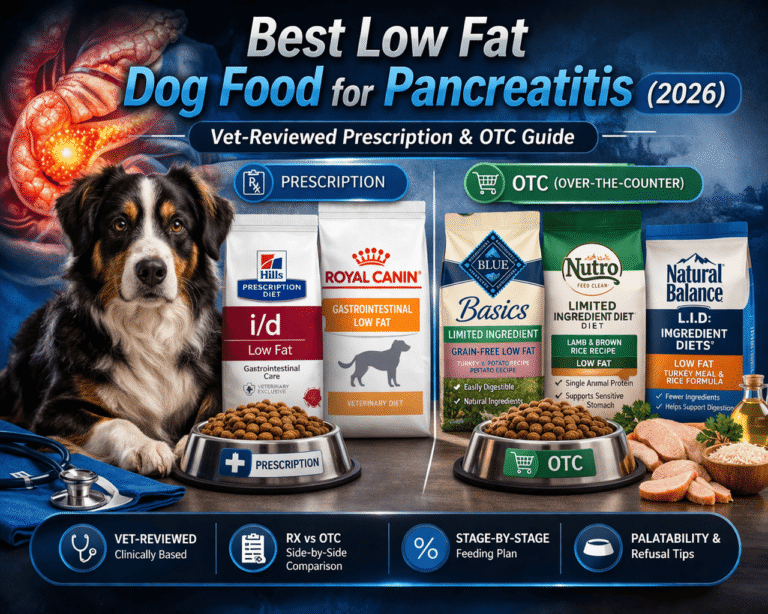
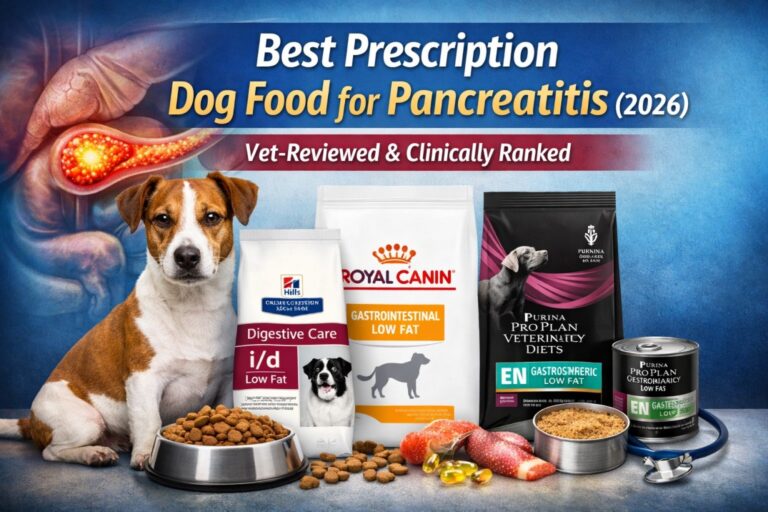
The best dog food for pancreatitis strictly limits dietary fat while remaining highly digestible and nutritionally complete. Prescription low-fat veterinary diets are specially formulated to meet this criterion. They are consistently recommended in both acute recovery and long-term management of pancreatitis.
What Percentage of Fat is Safe for Dogs with Pancreatitis?
From a clinical perspective, dietary fat thresholds matter more than brand names or marketing claims.
- Dry foods: ideally ≤ 8-10% fat on a dry matter basis
- Wet foods: typically <2% fat on an as-fed basis
Diets exceeding these levels significantly increase the risk of pancreatic flare-ups, even if the dog appears clinically stable.
Our Dog Food Evaluation Framework
We at Furry Tail Pet Care evaluate pancreatitis diets using:
Tier 1: Gold-Standard Low-Fat Prescription Diet Vet Recommended
These diets are part of medical management, not lifestyle nutrition. They are formulated, tested, and widely used for dogs with pancreatitis.
While prescription diets are not perfect or suitable for every dog, they remain the safest and most effective options for managing pancreatitis due to their controlled fat content and clinical testing.
1. Hill’s Prescription Diet i/d Low Fat
Why Vet Trust It
Nutritional Highlight
Best For
2. Royal Canine Gastrointestinal Low Fat- Best For Picky Eaters
Why Vet Trust It
Nutritional Highlights
Best For
3. Purina Pro Plan Veterinary Diets EN Low Fat
Why Vet Trust It
Nutritional Highlights
Best For
Tier 2: Conditional or Non-Prescription Options
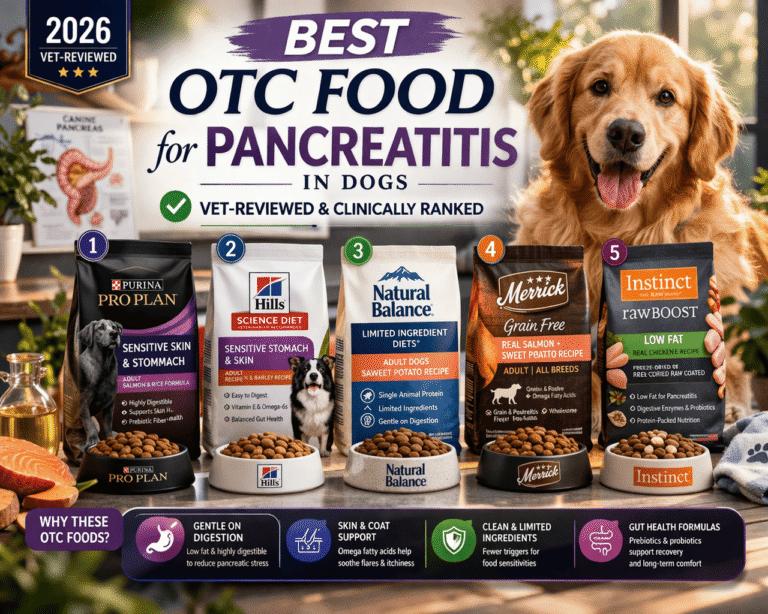
These diets are not the first line for pancreatitis. They may be used only when prescription diets are refused and under the guidance of a veterinarian.
3. Farmina N& D Gastrointestinal Low Fat
Why Its used
Nutrition highlights
Best for
Foods to Avoid in Pancreatitis
Dogs suffering from pancreatitis, along with liver disease, should avoid organ meats, oily fish, and copper-rich foods, as these can aggravate both pancreatic inflammation and hepatic stress
Comparison Table: Quick Clinical Decision Tool
Brand |
Tier |
Fat Level |
Evidence |
Best Use |
Hill’s Prescription Diet i/d Low Fat |
1 |
Very low fat |
Strong |
First-line treatment |
Royal Canine Gastrointestinal Low Fat |
1 |
Very low fat |
Strong |
First-line (Picky eaters) |
Purina Pro Plan Veterinary Diets EN Low Fat |
1 |
Very low fat |
Strong |
Long-term maintenance |
Farmina N& D Gastrointestinal Low Fat |
2 |
Moderate low-fat |
Limited |
Second line if Rx refused |
Disclaimer: Clinical fat thresholds used in this guide are very low fat: ≤ 8% dry matter, Moderate low fat: 9-12% dry matter. Always refer to the product label for exact values.
Feeding Tips That Prevent Relapse
Diagnosis
Pancreatitis is diagnosed using a combination of clinical signs, blood tests (pancreatic lipase such as cPLI), abdominal ultrasound findings, and response to treatment.
In chronic cases, blood tests may appear normal between flare-ups, making history and imaging especially important.
Vet Insight
The “False Negative” Trap: In the advanced chronic pancreatitis patient, a cPLI blood test level sometimes returns to a “normal result.” Why? Because the pancreas gland is atrophied, there isn’t enough healthy tissue left to secrete enzymes into the blood. If your dog is showing symptoms, but has a “normal” blood test, ask your veterinarian about a high-resolution ultrasound.
Treatment
There is no single curative drug for pancreatitis treatment that focuses on
Vet Insight: Modern Treatment Early Micro-enteral Nutrition
The old rule of “fasting for 48 hours” is now outdated. 2025 clinical standards WSAVA have shifted to Early Micro-enteral Nutrition: The New Standard: Suggest feeding small, ultra-low-fat meals as soon as vomiting is controlled (usually within 12-24 hours). The “Gut-First” Benefit: Early feeding protects the intestinal lining and prevents “bacterial translocation” where bacteria from the gut leak into the bloodstream. Result: Feeding the gut is more critical for a fast recovery than “resting the pancreas.“
Long Term Management
Chronic pancreatitis may coexist with other long-term conditions such as kidney disease, particularly in older dogs. These patients often require diets that balance fat restriction with controlled protein and phosphorus to avoid worsening renal workload.
1. Is High-Protein Bad for Dogs with Pancreatitis?
Yes, it depends on the fat content. Clinically, protein itself does not trigger the pancreas. However, in the commercial market, “high-protein” is always synonymous with “high-fat.” Boutique diets with 35%+ protein typically use fatty meat meals and oils, which can trigger flare-ups.
The clinical rule:
1. Lean protein is safe: highly digestible, ultra-lean proteins help maintain muscle during recovery.
2. High-protein kibble is risky: Most exceed the 10% fat threshold, making them dangerous for pancreatitis patients.
Do not choose food based on protein alone. Always audit the Fat-to-Protein ratio to ensure the pancreas remains “quiet” while providing essential amino acids.
2. Can Pancreatitis Dogs Eat Grain-Free Food?
Grain-free status does not help pancreatitis, but often increases fat content.
3. How Long Should My Dog Stay On Low-Fat Food?
Most dogs require lifelong fat restriction to prevent relapse.
4. Can Dogs with Pancreatitis Eat Treats?
Most dogs with pancreatitis should not receive regular treats, as even small amounts of fat can trigger a relapse. If treats are needed, use vet-approved low-fat options or a small portion of the dog’s prescription diets as treats
5. Can Pancreatitis in Dogs Come Back After Recovery?
Yes. Pancreatitis frequently recurs, especially if dietary fat is not strictly controlled. Dogs with previous episodes are considered high risk for relapses and usually require lifelong low-fat feeding.
If you remember only one thing. Dietary fat is the single most important trigger for pancreatitis relapse. Even one high-fat meal can undo weeks or months of recovery
Final Vet Verdict
Pancreatitis is a diet-sensitive disease. Low-fat prescription diets remain the safest and most effective way to prevent painful relapses. If you ignore fat, then nothing else matters
Furry Tail Pet Care- Vet-led, evidence-based canine nutrition